Every TMS pricing grid in the industry agrees on one thing: a 100% or 101% translation memory match is worth almost nothing. Typical net rates bill them at 0–1% of the word price, and the segment ships exactly as it sits in the TM. No one reads it. That's the deal: the TM is trusted, so the TM is free.
Which is exactly right — until you ask where the TM came from. Years of vendors, mergers of memories, a rushed batch from 2019, a linguist who misread a term once and confirmed it forever. A translation memory is an archive of every decision ever made, including the wrong ones. And the net-rate model guarantees the wrong ones ship forever, for free, unread.
What we do by default
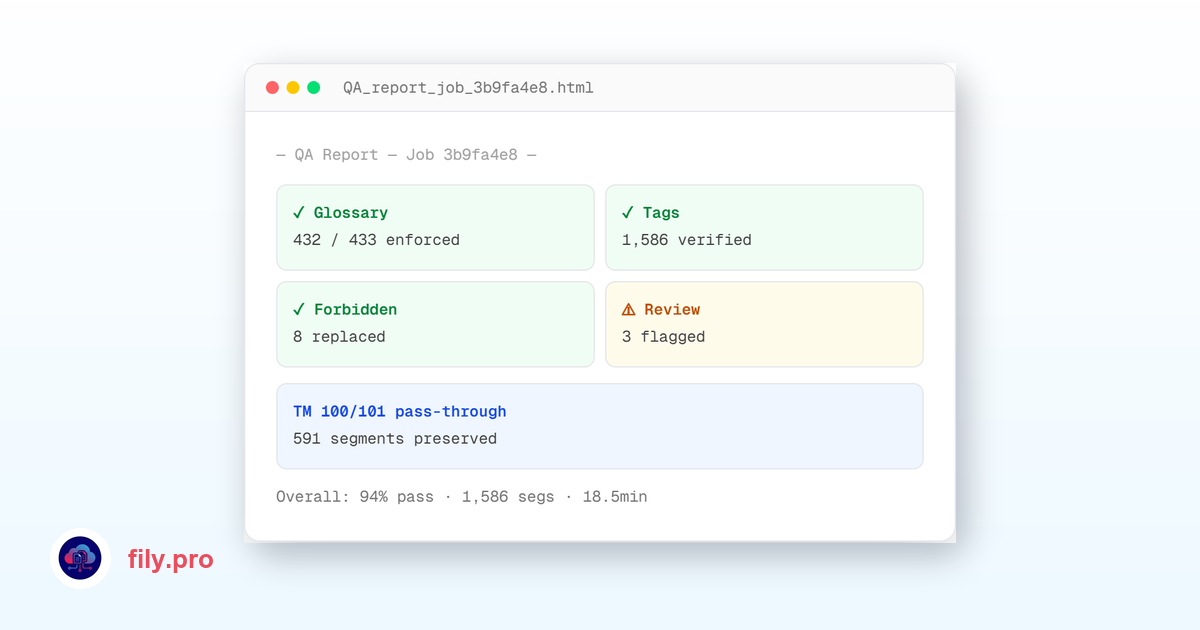
Fily's default is the same promise, kept strictly: 100/101 matches bypass the AI byte-for-byte and cost $0 — rate zero, not a discount. Your TM is yours; we don't touch it and we don't bill it.
What we do when you're not so sure
For clients who inherited a TM they don't fully trust, we run a different lane: exact matches are re-translated and compared against the stored version, and divergences are flagged for review instead of shipping silently. The stored translation still wins unless a human decides otherwise — but now someone actually looked.
We built this lane because a client's legacy TM turned out to carry errors that had been delivered verbatim, job after job, by every previous vendor — precisely because every previous vendor billed those segments at 0% and treated them as done. The re-check pass caught them on the first run.
The question to ask your vendor
Not “what's your rate on 100% matches?” — everyone's rate is zero-ish. Ask instead: “when is the last time anyone read one?” If the answer is never, your cleanest-looking segments are the ones no one has checked in years.
Want this in your workflow? Try Fily with one file — no card, no demo form.