A translation memory is a promise: a sentence that was translated and approved once comes back the same way every time after that. This week we asked a blunt question about our own implementation — is it actually firing every single time it should? — and traced every lookup path end to end instead of trusting the dashboards.
Some of what we found was not flattering. All of it is fixed. Here is the honest list.
What we found
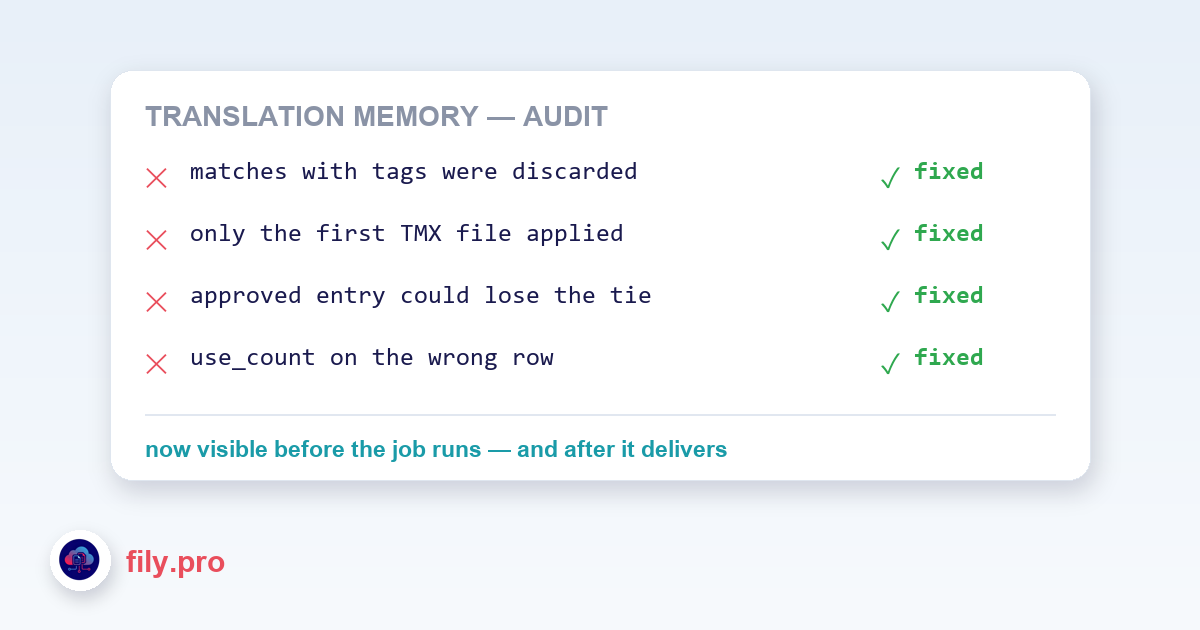
- One of the two lookup paths compared the raw source text, formatting tags included — so a sentence that matched perfectly could be discarded because a bold tag differed. The other path did it correctly. They now share one implementation.
- A verification step after the lookup did not strip tags either, which silently rejected every match that contained any tag at all.
- When several TMX files were selected for a job, only the first was actually applied. The rest were accepted, stored — and ignored.
- When a human-approved entry and an ordinary entry both matched, the ordinary one could win the tie. Approved entries now always take precedence.
- The usage counter sometimes incremented the wrong row, so a memory could report “never used” while it was firing daily. A counter that lies is worse than no counter — it is what you audit with.
- Not every pipeline was feeding approved work back into the memory. Now the general document pipeline writes back too, so today’s approved review is tomorrow’s instant match.
Verifiable, not just fixed
Bug fixes you cannot check are just claims, so the memory is now visible at both ends of a job. Before you run it, the new-job screen tells you how much memory applies to this specific job — which scope it draws from and roughly how far it reaches. After delivery, the memory summary reports what was actually used. If the promise breaks again, you will see it before we blog about it.
Why publish this
Because “your TM is applied automatically” is a sentence every vendor in this industry says, and almost none of them lets you check. We would rather show you the audit — including the unflattering parts — than ask you to take the sentence on faith. If a match you were sure about ever failed to come back, one of the items above was probably why. It will come back now.
Want this in your workflow? Try Fily with one file — no card, no demo form.